
Affiliate Disclosure: Some of the links on this site are 'affiliate links.' We may receive an affiliate commission if you click on the link and purchase the item, with no additional cost to you.
If you’ve ever washed your Shih Tzu and thought, “Why does the coat feel squeaky but somehow still look flat?” we’re right there with you. Choosing the right Shih Tzu shampoo can be the difference between comfortable skin and that itchy, flaky, “please stop scratching me” spiral, plus the difference between smooth fluff and instant tangles.
We learned this the real-life way with our Shih Tzu, Tzuzi. The first “any dog shampoo” we grabbed made bath time smell nice, but it didn’t help the dry patches or the frizz. After a few rounds of trial and error (and a lot of brushing), it clicked: Shih Tzus aren’t just “small dogs.” Their skin and coat have their own rules.
Key Takeaways
- Match shampoo to the issue, not the marketing (itch, flakes, oil, odor, mats).
- Pick dog pH-balanced formulas, never human shampoo.
- Look for gentle cleansers and soothing ingredients like colloidal oatmeal and aloe.
- Use conditioner if we want fewer knots and a softer coat.
- Rinse like we mean it, leftover product can cause itching.
- If skin looks angry (red, oozing, smelly), it’s vet time, not “new shampoo” time.
Start with our Shih Tzu’s skin and coat needs
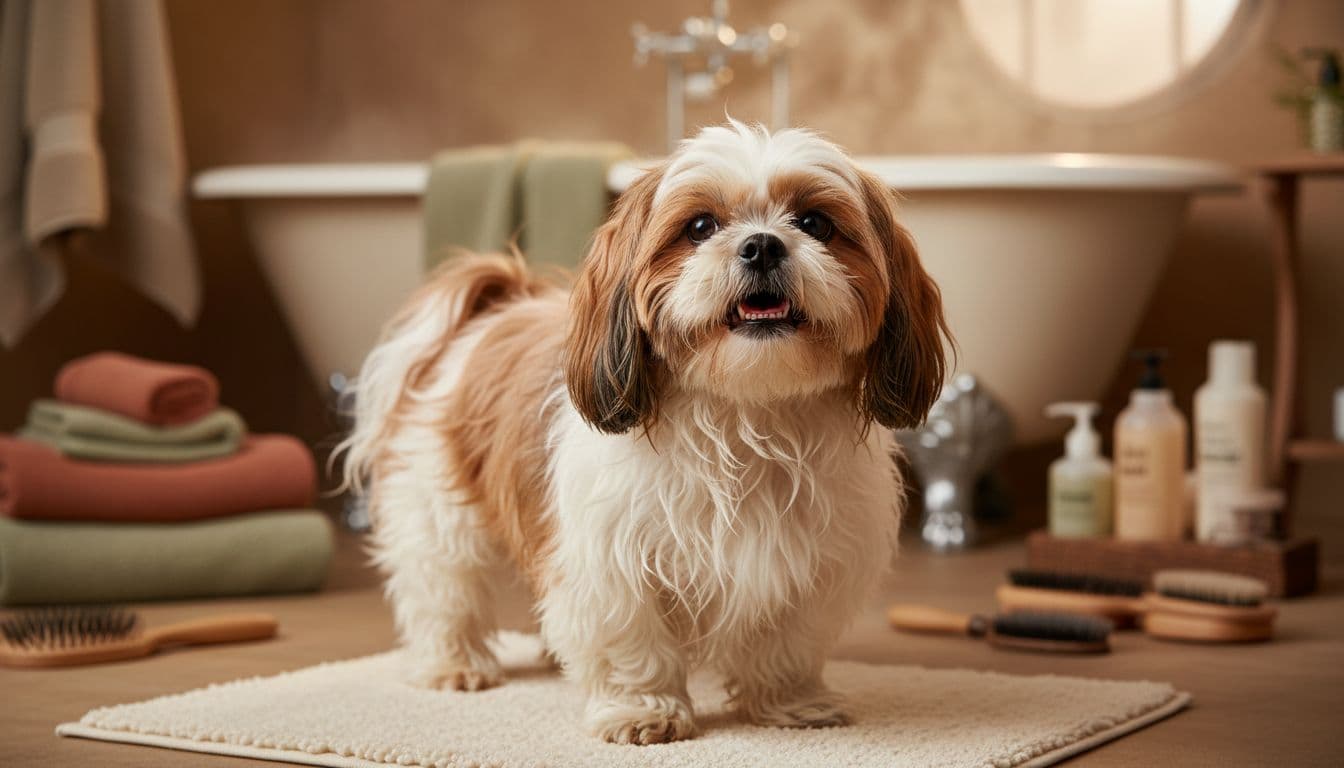
Shih Tzus are basically little floor mops with feelings. Their coat holds onto pollen, dust, food bits, and whatever mystery item they found under the couch. Add a sensitive belly, facial folds, and those prominent eyes, and we’ve got a breed that usually does best with extra-gentle bathing products.
Before we buy anything, we like to do a 30-second self-check. We’re not trying to diagnose, just trying to choose smarter.
- Is the skin dry or flaky, especially after baths?
- Is there itching that seems worse in certain seasons?
- Does the coat feel oily or smell “funky” fast?
- Are we fighting mats every time we brush?
- Are we dealing with tear staining and a messy face area?
Those answers point us toward the right kind of shampoo, and help us avoid wasting money on something that “works for dogs” but doesn’t work for our Shih Tzu.
Match the shampoo to the problem we are seeing (itch, dandruff, oily coat, stink, mats)
Here’s the simplest way we’ve found to shop: identify the main problem, then pick the most gentle product that targets it.
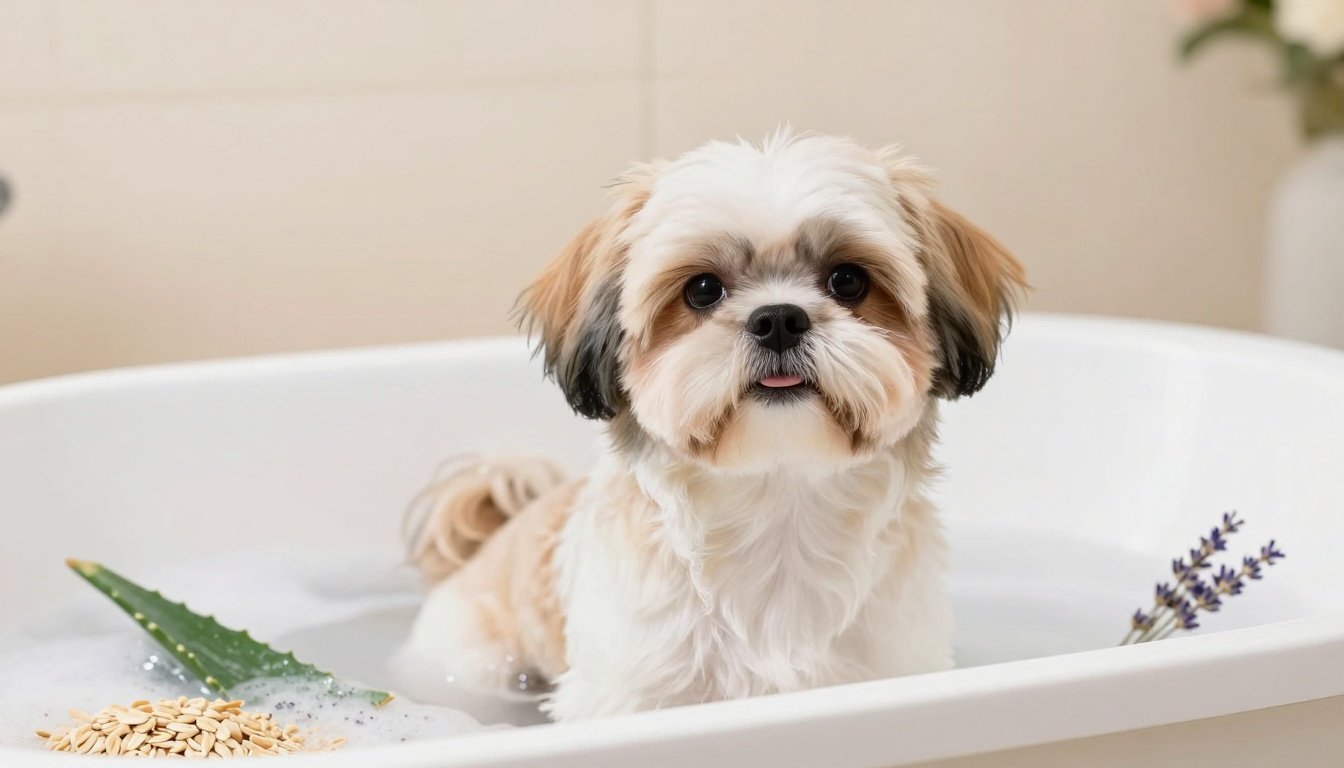
Itch or dry skin: We look for colloidal oatmeal and aloe. These ingredients tend to calm the skin and help it hold moisture, especially when the air is dry or the heat is running.
Dandruff or flaky patches: We still start with a moisturizing shampoo, then pay extra attention to rinsing and drying. Flakes often get worse when product residue sits near the skin.
Oily coat: We avoid “extra stripping” shampoos and choose something that cleans well but still says mild or moisturizing. Shih Tzu skin can swing from oily to irritated quickly if we over-dry it.
Stink: Deodorizing shampoo can help, but we use it only when needed. If the odor is sudden, strong, or musty (and comes back fast), it may be yeast or bacteria. That’s not a perfume problem.
Mats and tangles: We choose easy-rinse formulas and plan on conditioner. For long coats, shampoo alone is like washing long hair without conditioner and hoping it doesn’t knot. It will.
A quick reality check: if we see red patches, sores, oozing, hair loss, intense itching, or a strong persistent odor, we call the vet. A new shampoo can’t fix an infection or an allergy flare that needs medical care.
Think about coat length and lifestyle (puppy cut, long coat, outdoor play, humid weather)
Coat length changes everything. A puppy cut can often handle a basic gentle shampoo, since there’s less hair to trap debris and form knots. Long coats, show coats, and anything in between usually do better with formulas that are moisturizing and rinse clean.
Lifestyle matters too:
- If our Shih Tzu plays outside a lot, baths may happen more often, so gentleness becomes the top priority.
- If we live somewhere humid, we watch for “skin funk” in warm months. Some of us rotate between a gentle everyday shampoo and a targeted shampoo (like anti-itch) by season, while keeping the formulas mild.
- If our dog gets wiped down daily (paws and face), we can often stretch the time between full baths, which helps sensitive skin.
Read the label like a pro, what ingredients to choose and what to avoid
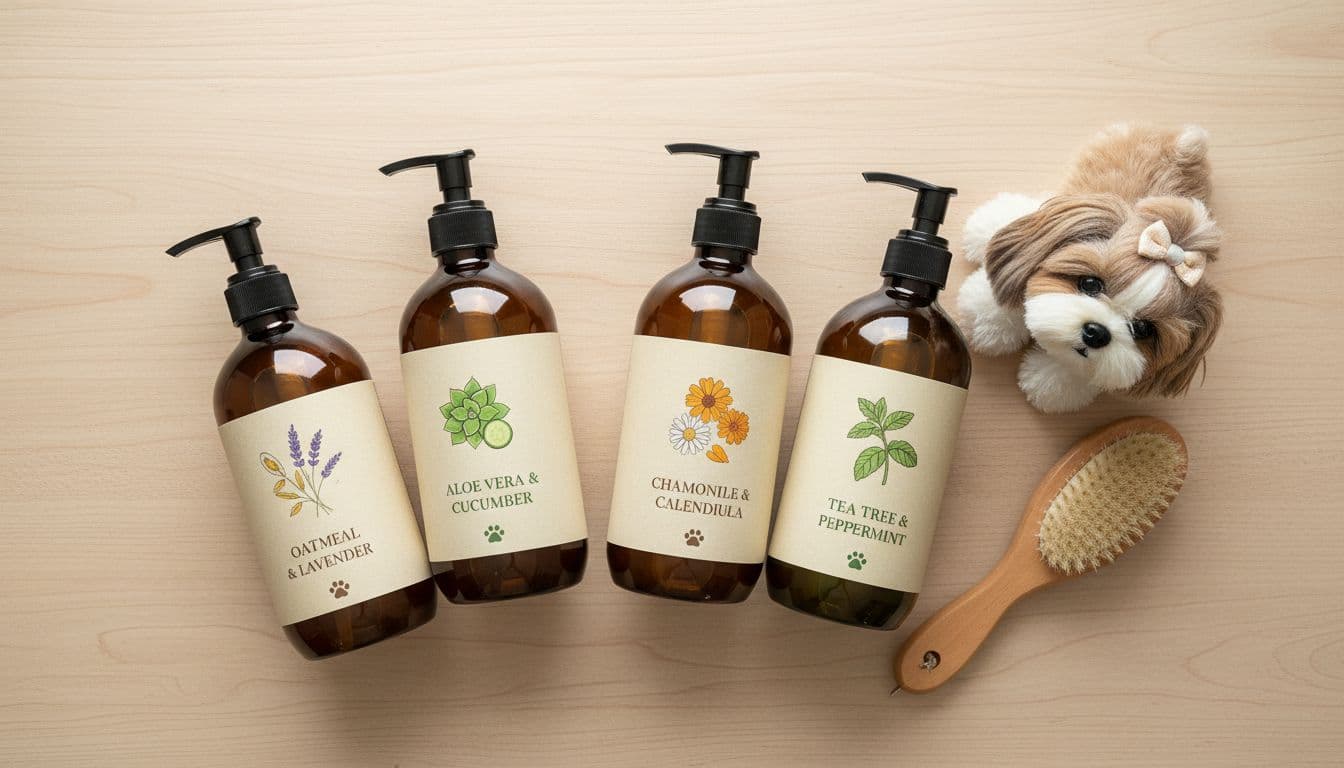
Labels can feel like a word soup, but we only need a few checkpoints. This is our “standing in the aisle” checklist:
- Says pH-balanced for dogs
- Mild cleansers (not harsh “deep clean” language)
- Short ingredient list we can actually read
- Fragrance is light or optional (unscented is often safest)
- Clear purpose (moisturizing, hypoallergenic, medicated) that matches our main issue
And yes, we skip human shampoo. Dog skin has a different pH than ours, and using human products can lead to dryness, irritation, and flaking. PetMD’s vet-reviewed overview of how to pick a safe dog shampoo is a solid reference if we want the “why” behind that.
Ingredients we can look for in a Shih Tzu shampoo
We don’t need fancy. We need soothing, simple, and Shih Tzu-friendly.
- Colloidal oatmeal: Helps relieve itch and supports moisture, a go-to when skin seems reactive.
- Aloe vera: Soothes and hydrates, especially when skin looks dry or a little pink.
- Chamomile: Calming for sensitive skin, and often paired with other gentle botanicals.
- Neem: Often used for skin support, some owners like it for “funky” seasons (we still keep it mild).
- Hypoallergenic formulas: Great when our Shih Tzu reacts to “normal” products or has allergy-prone skin.
We also like the idea of tearless for face washing since Shih Tzus have forward, expressive eyes. That said, we still treat the face like a no-suds zone. Tearless doesn’t mean “aim for the eyeballs.”
Ingredients and claims we should be careful with
A few label claims sound exciting, but don’t always help our Shih Tzu.
“Extra foamy”: Foam isn’t the goal. Clean, calm skin is the goal. Heavy foam can mean stronger detergents, which can leave sensitive dogs dry.
Strong perfume: Some Shih Tzus do fine with fragrance, but many don’t. If our dog scratches after baths, fragrance is one of the first things we remove.
Sulfates and parabens: Not every dog reacts, but a lot of owners avoid them when dealing with dryness or irritation. If our Shih Tzu is already itchy, we choose the gentlest base possible.
Medicated claims: Anti-fungal, anti-bacterial, anti-itch shampoos can be helpful for the right problem. They can also be the wrong tool if we’re guessing. If symptoms are ongoing or severe, we ask our vet which active ingredient makes sense and how often to use it. The Shih Tzu Club guidance on choosing shampoo and bathing is also a useful read, especially around bathing frequency for skin conditions.
Choose the right type of shampoo, then use it the right way
Buying the “right” shampoo is only half the win. Using it in a Shih Tzu-friendly way is where the fluffy magic happens.
Everyday gentle shampoo vs hypoallergenic vs medicated, how we pick
We try to pick one main shampoo, then only add extras if we truly need them.
Everyday gentle moisturizing shampoo: Our default for routine baths. Great for most Shih Tzus, especially when paired with conditioner.
Hypoallergenic shampoo: Our pick when there’s mystery itching, frequent licking, or a history of reacting to products. It’s also a safe choice for dogs we bathe often.
Medicated shampoo: Our “specific tool” category. If a vet suspects yeast, bacteria, or dermatitis, medicated shampoo can be part of the plan, but we follow instructions closely.
In January 2026, we’re seeing a continued push toward gentle, targeted formulas (especially oatmeal and hypoallergenic bases) and more pairing of shampoo with conditioners or leave-ins for long coats. If we want a broad, vet-informed overview of what’s popular and why, veterinarian-recommended shampoo picks can help us compare categories without getting lost in hype.
We’ve also seen some sources mention options like Lillian Ruff oatmeal formulas or HypoCare+ hypoallergenic bases as examples in the “moisturizing” and “sensitive skin” lanes. We treat brand lists as starting points, not the finish line. Our dog’s skin tells the truth.
If we want breed-focused product roundups, Shih Tzu shampoo recommendations for 2026 can be useful for building a shortlist.
Don’t skip conditioner, it can make or break a Shih Tzu coat
Conditioner is our secret weapon for a coat that stays soft, brushes out easier, and doesn’t grab onto itself like Velcro. For long coats, it’s the difference between “cute fluffy” and “why is there a knot behind every ear?”
Our simple method:
- We rinse shampoo fully first.
- We apply conditioner to the ends first, where tangles love to form.
- We lightly work it through the coat with fingers (not aggressive rubbing).
- We let it sit 3 to 5 minutes, if the label says it’s safe.
- We rinse until the coat feels slick-free, not coated.
A lot of post-bath itching is just leftover product. Rinsing is boring, but it’s also the fix.
Bath time checklist for Shih Tzus (so we get clean hair without new tangles)
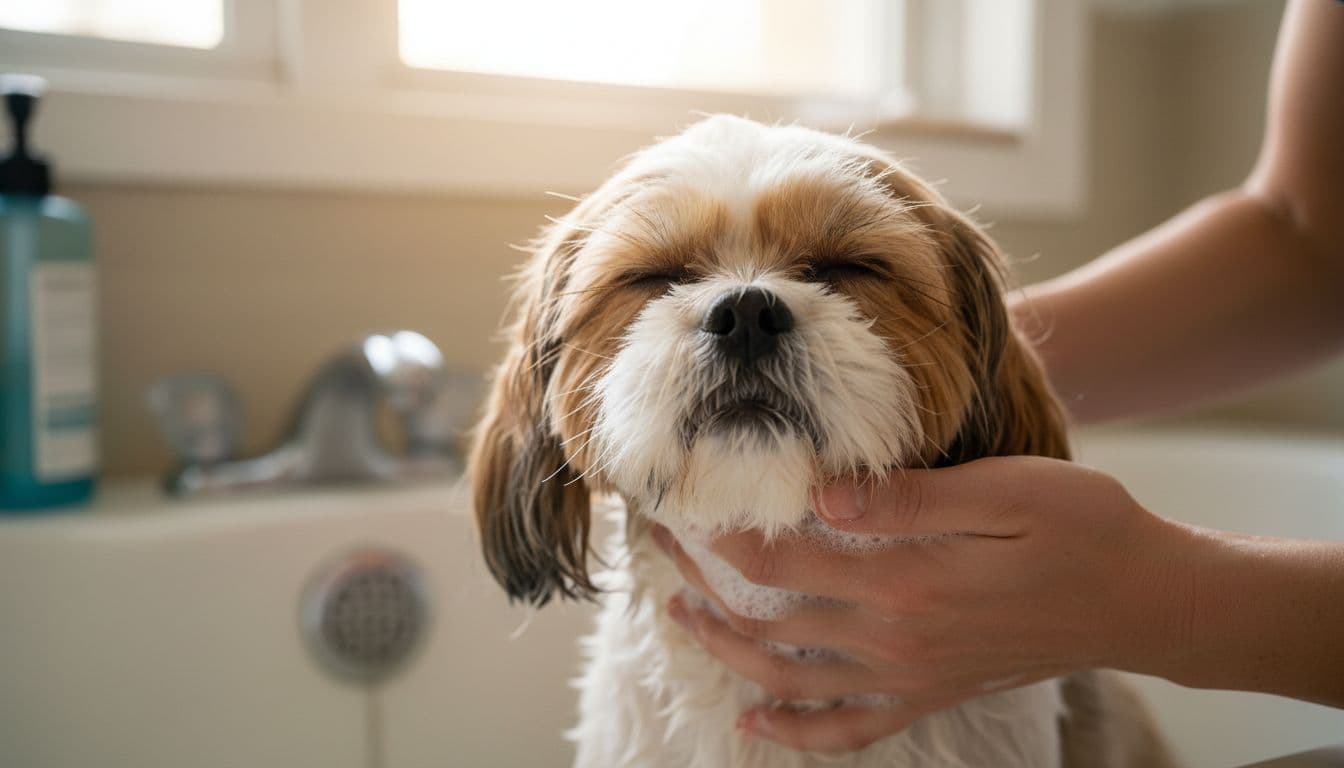
Shih Tzus are famous for two things: looking adorable and collecting tangles like it’s their hobby. A good routine keeps bath time from turning into a mat-making event.
Our simple bath routine (brush first, wash in sections, rinse well, dry fully)
- Brush first. Water tightens mats. If we bathe over tangles, they lock in.
- Wet the coat fully. A quick splash isn’t enough, water needs to reach the undercoat.
- Dilute shampoo if needed. Many dog shampoos work better diluted, and it helps spread product evenly.
- Wash in sections. We smooth shampoo down the coat from root to tip. We skip rough circular scrubbing, it can twist hair into knots.
- Let it sit briefly. If the label allows, we leave it for 3 to 5 minutes.
- Rinse until the water runs clear. Then rinse a little more.
- Condition, then rinse again.
- Dry fully. Damp undercoats can lead to skin issues, especially in humid homes. We towel blot, then use a dryer on a safe warm setting while brushing.
For the face, we use a damp cloth, or a tearless cleanser used carefully, and we keep suds away from eyes and nose. Tzuzi tolerates this best when we go slow and keep it calm.
How often we should bathe a Shih Tzu, and what to do between baths
Many Shih Tzus do well with full baths about every 3 to 6 weeks. Some need more, especially if they’re outdoors daily or have skin allergies that benefit from more frequent washing with a vet-approved gentle product.
Between baths, we like quick cleanups:
- Waterless dog shampoo or grooming wipes for paws, belly, and butt fluff
- A damp cloth for the face and beard
- A light spritz detangler for brushing days (especially for long coats)
If baths are happening often, we choose the mildest shampoo we can, and we don’t skip conditioner.
Frequently Asked Questions
Can we use baby shampoo on a Shih Tzu?
We skip it. Baby shampoo is made for human skin and eyes, not dog skin pH. If we need something mild, we choose a dog-specific tearless formula and still keep product out of the eyes.
What’s the best Shih Tzu shampoo for itching?
We usually start with colloidal oatmeal and aloe in a dog pH-balanced formula. If itching is intense, sudden, or comes with redness or odor, we call the vet because yeast, bacteria, or allergies may be involved.
Should we choose a whitening shampoo for a white Shih Tzu?
We’re careful. Some whitening shampoos can be drying. If we use one, we pick a gentle version, don’t overdo frequency, and follow with conditioner. Often, better rinsing and a mild shampoo help brightness more than harsh “brighteners.”
What does “hypoallergenic” really mean on dog shampoo?
It usually means fewer common irritants (like heavy fragrance or certain additives), but it’s not a guarantee. If our Shih Tzu has allergies, we still patch-test by washing a small area first and watching for itching over the next day.
Why does our Shih Tzu still smell after a bath?
If the smell comes back fast, it can be trapped moisture, product residue, dental issues, anal gland issues, or skin overgrowth like yeast. If it’s strong or musty, we don’t just switch scents, we check skin folds, ears, and talk to the vet.
Conclusion
Choosing a Shih Tzu shampoo gets easier when we keep it simple: match the formula to skin and coat needs, read the label for gentle dog-safe ingredients, and use conditioner plus a tangle-safe bath routine. That’s the combo that took Tzuzi from post-bath frizz and scratching to comfy skin and a coat that actually stayed fluffy.
After we switch shampoos, we watch our dog’s skin for a full week. If the coat improves but the itching doesn’t, we adjust. Our Shih Tzus can’t tell us what stings, but their skin always gives us the answer.