
Affiliate Disclosure: Some of the links on this site are 'affiliate links.' We may receive an affiliate commission if you click on the link and purchase the item, with no additional cost to you.
The first week with our shih tzu puppy, Tzuzi, felt like living with a tiny, fluffy alarm clock that also had very strong opinions. She’d cuddle like an angel, then sprint under the coffee table with a sock like she’d just pulled off the heist of the century. We laughed a lot, cleaned a lot, and learned fast that this breed has impressive breed intelligence (smart, sweet, eager to please, and a little stubborn, in the most lovable way).
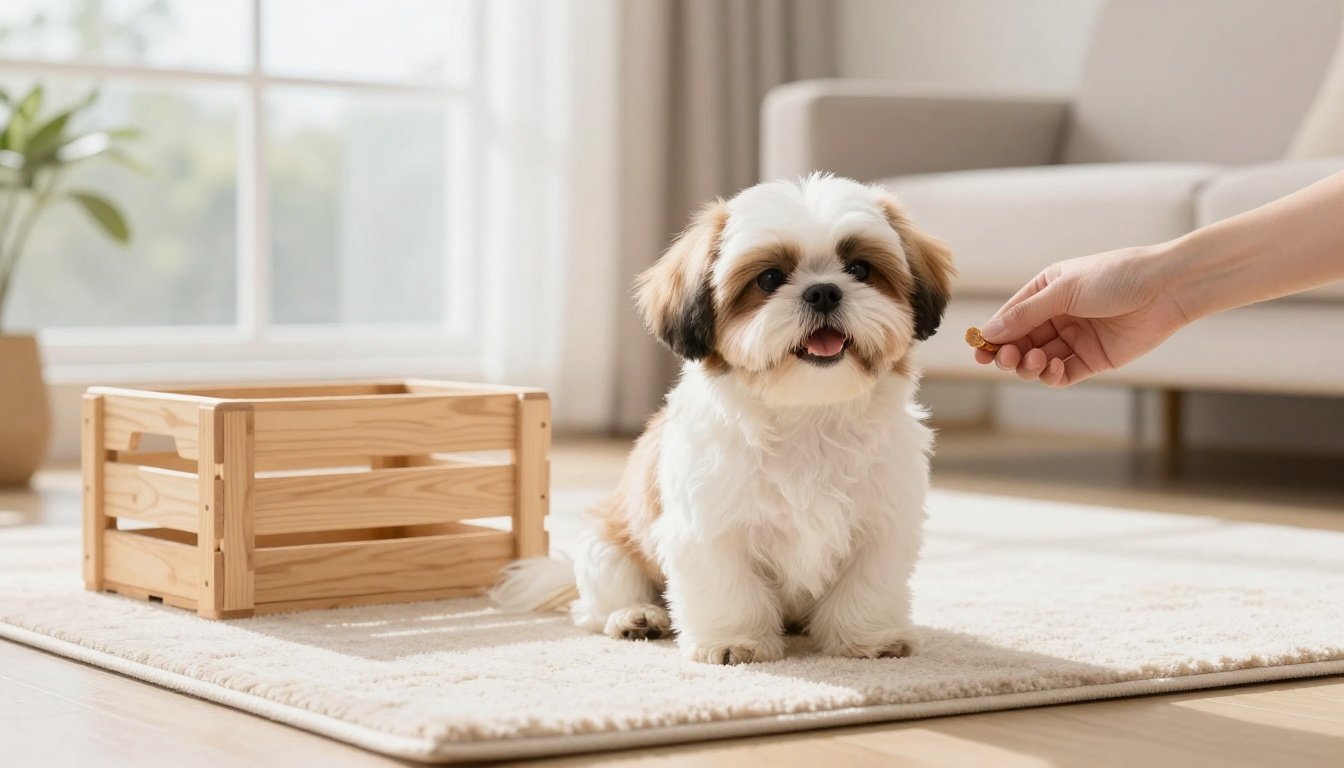
That’s why our approach to shih tzu puppy training stays simple: short sessions, positive rewards, and clear routines. No guilt if you feel behind. Puppies don’t read calendars, and real life is messy.
In this step-by-step guide, we’ll cover potty training, crate training, basic commands, leash skills, socialization, and a weekly plan you can actually stick to.
Key Takeaways
- We keep training short and upbeat using positive reinforcement (5 to 10 minutes is plenty).
- We build habits with a consistent routine, not willpower.
- We use crate training and playpen as a safe zone, not a punishment.
- We prevent most accidents by watching timing and limiting freedom.
- We teach commands in a practical order, then add distractions slowly.
- We socialize gently and daily, without overwhelming our puppy.
Before we start training, we set up the house, the schedule, and the rewards
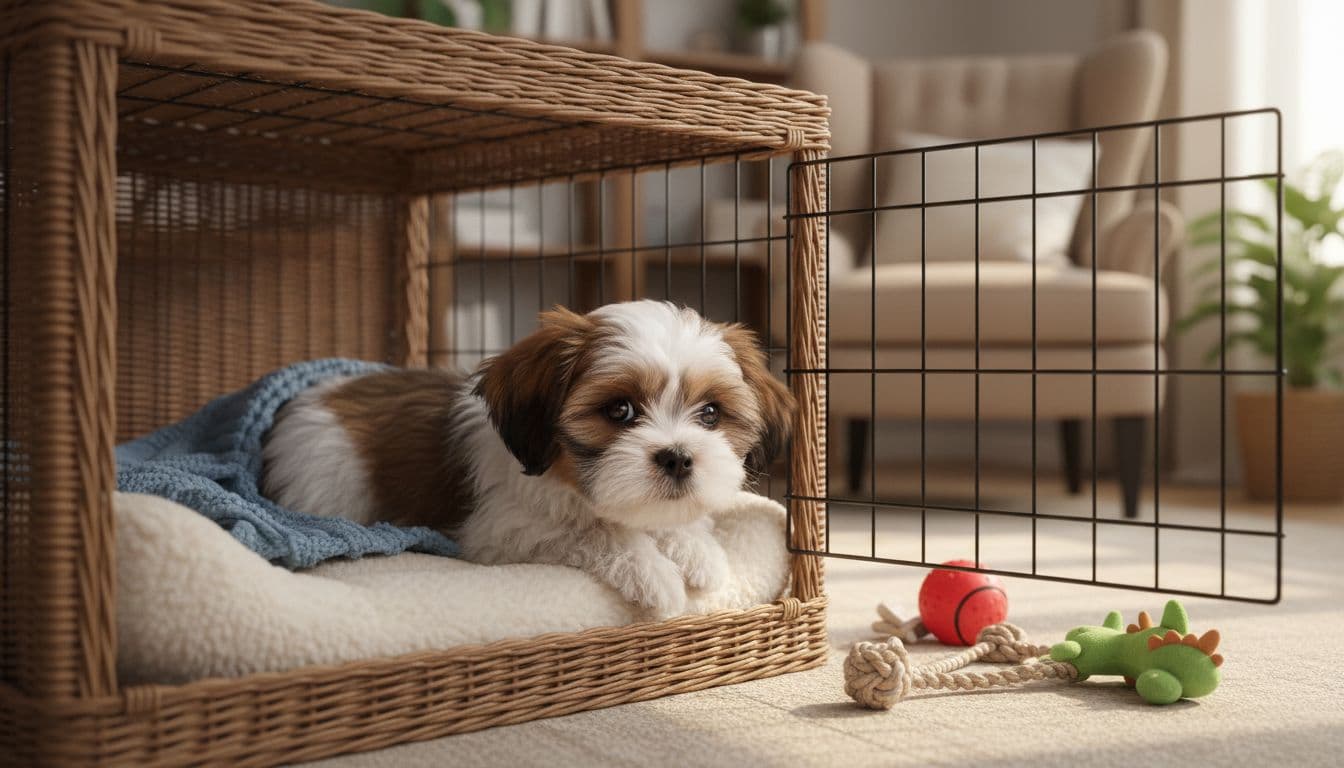
Setup is the quiet hero of training. When the house makes the “right choice” easy, we get fewer accidents, fewer chewed mysteries, and a puppy who learns faster. With a shih tzu puppy, that matters, because they’re quick to notice patterns, including the accidental ones we create.
Here’s our simple starter checklist:
- Crate for kennel training: A travel kennel big enough to stand and turn around, not so big that one corner becomes a bathroom
- Playpen or baby gates: for puppy proofing and to shrink the “freedom zone”
- Chew toys: soft chews and safer long-lasting options (supervised)
- Enzymatic cleaner: for any indoor accidents (regular cleaners don’t fully remove scent)
- Treat pouch for training treats: so rewards happen fast
- Clicker (optional): handy if we like precise timing (it’s been getting more popular because it’s clear and consistent)
- One safe potty spot outside: easy to reach, not too exciting
A sample daily rhythm with a consistent schedule for an 8 to 12-week puppy looks like this:
Wake → potty → eat → potty → play (short) → potty → nap (crate or pen)
We repeat that cycle all day, sticking to the feeding schedule. Training sessions fit inside the rhythm, usually once or twice daily, 5 to 10 minutes each. If we want a deeper refresher on Shih Tzu temperament and what motivates them, we keep this handy: Effective Shih Tzu puppy training techniques.
Our rules for training sessions that actually work (short, fun, and consistent)
In 2026, the training advice that keeps proving itself is still refreshingly simple: reward what we like, ignore or redirect what we don’t, and keep it upbeat. Shih Tzus tend to shut down with harshness, or they’ll turn it into a dramatic little standoff.
Our rules:
- We use a calm, friendly voice.
- We say the cue once, then help them succeed.
- We mark and reward fast (within a second).
- We stop while they’re still winning, not when they’re bored.
What we don’t do: yelling, leash jerks, “alpha” stuff, or rubbing a nose in accidents. Those methods don’t teach the skill, they just teach fear.
Treat tip: we use tiny, soft, high-value bits. Think pea-sized. Later, once a behavior is solid, we fade treats by rewarding every other rep, then randomly, then with praise, play, or “life rewards” (like going outside).
How we use crate and playpen time without making it scary
We want the crate to feel like a cozy bedroom, not a penalty box. Here’s the step-by-step that worked well with Tzuzi:
- Make it comfy: soft bedding, safe chew, and a calm spot near us.
- Feed meals inside with the door open at first.
- Close the door for tiny reps: 10 seconds, treat, open. Repeat.
- Add a chew and let them settle for a minute or two.
- Practice alone time in baby steps: 1 to 2 minutes when sleepy, then slowly build.
A common mistake is letting the puppy out while they’re whining. We wait for one quiet second, then open the door. That teaches, “calm gets you out,” which is a lovely lesson for future sanity.
Potty training a Shih Tzu puppy step by step (and what we do after accidents)
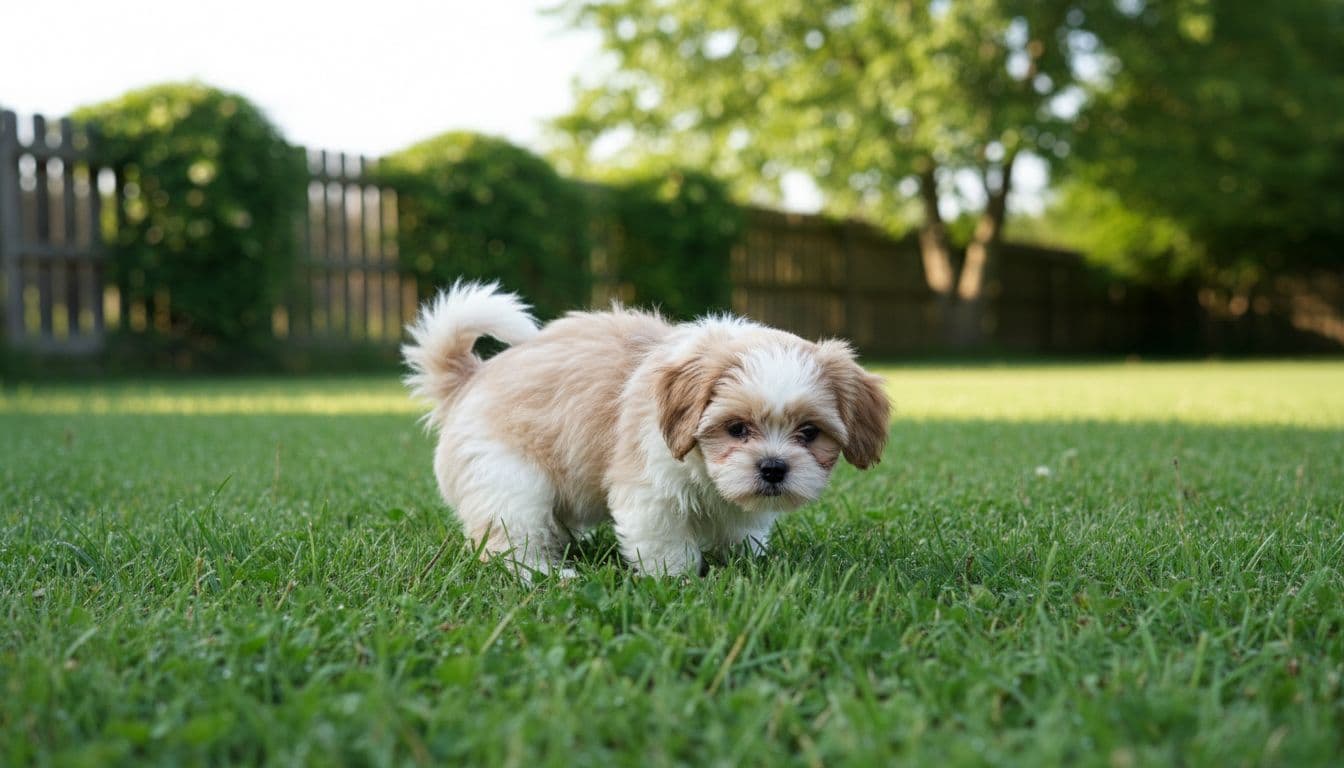
Potty training feels like it should be a single breakthrough moment, but it’s really a string of small wins. Shih Tzus do best when we treat potty training like a routine, not a negotiation.
Our timing rules in the early weeks for a Shih Tzu puppy:
- Outside right after waking
- Outside after eating
- Outside after playing
- Outside at least every 1 to 2 hours at first (yes, even if it feels frequent)
We also keep meals on a consistent schedule. For water before bedtime, we follow our vet’s guidance for our puppy’s needs, but we do aim for a consistent routine so nights aren’t chaotic. If you want extra detail on the mechanics, this resource covers the basics clearly: expert Shih Tzu potty training tips.
Our simple potty routine, from first morning to bedtime
We follow the same mini-script every time:
- Leash up (even in the yard, it keeps it focused)
- Walk to the same spot
- Say a cue like “go potty”
- Stand still and wait quietly
- The second they finish, we offer verbal praise and treat to reinforce the desired behavior immediately
At night, we keep it boring. Last potty trip right before bed, crate near our bed at first, and if they wake us, we do a quick potty break with minimal chatter, then straight back to the crate. No play. No “well since we’re up…” snack party.
When accidents happen indoors, we do this (cleaning and prevention)
Puppy accidents are information. They tell us our timing, supervision, or freedom zone got too generous.
In the moment:
- We interrupt gently (a soft “oops” is enough).
- We scoop them up and go outside.
- If they finish outside, we still praise and treat.
Then we clean with an enzyme cleaner. That matters because dogs follow scent trails, and regular cleaners can leave a “bathroom invitation” behind.
Prevention is where the magic is to avoid puppy accidents:
- We tighten supervision (eyes on the puppy).
- We take more frequent trips for a few days.
- We reduce freedom to one room, or use the pen.
- We use the crate when we can’t watch.
It’s not strict, it’s supportive. Puppies can’t learn in a house that’s too big too soon.
The first commands we teach, in the exact order that helps most
We teach commands in an order that makes daily life smoother. With Shih Tzus, we get better results with calm repetition, positive reinforcement, and strong motivation. They’re not trying to be difficult, they just don’t see the point unless we make it worth it.
We start in a quiet space, then we “level up” by adding mild distractions over time (different rooms, the porch, the yard). That step is often what people miss. Puppies don’t generalize well, so “sit” in the kitchen doesn’t automatically mean “sit” in the driveway.
If you like seeing another step-by-step explanation with pictures, this guide can be helpful: how to train your Shih Tzu.
Name game, sit, and down, our week one building blocks
Name game: We say their name once, and the moment they look at us, treat. That’s it. We do it all day in tiny moments. The goal is, “My name means good stuff happens.”
Sit: We hold a treat at the nose, then move it up and slightly back. When the butt hits the floor, we mark and treat. We add the command word “sit” right before the motion once they’re predicting it.
Down: From a sit, we bring the treat from their nose straight down to the floor, then slowly out. When elbows touch down, mark and treat. We add the command word “down” right before the motion once they’re predicting it.
We keep it to 3 to 5 good reps, then we break. Ending on a win builds confidence. These week one building blocks represent key training milestones for your shih tzu puppy.
Come, leave it, and gentle handling for grooming and vet visits
Come: We start at a short distance, crouch a little, use a happy voice, and reward like we’re throwing a tiny party. We never punish after they come, even if it took a while. “Come” must stay safe.
Leave it: Treat in a closed fist. Puppy sniffs, paws, licks, then eventually looks away. The moment they look away, we mark and reward from the other hand. That “look away” moment is the skill.
Handling games (huge for Shih Tzus): we touch paws, peek at ears, do a quick brush stroke, and pair it with treats. Puppy grooming is part of life with this breed and their double coat, so we make it normal early. With Tzuzi, we kept sessions comically short, like “two seconds of brushing, treat, done.” It worked.
Loose leash walking, social skills, and confidence, without overwhelming our puppy
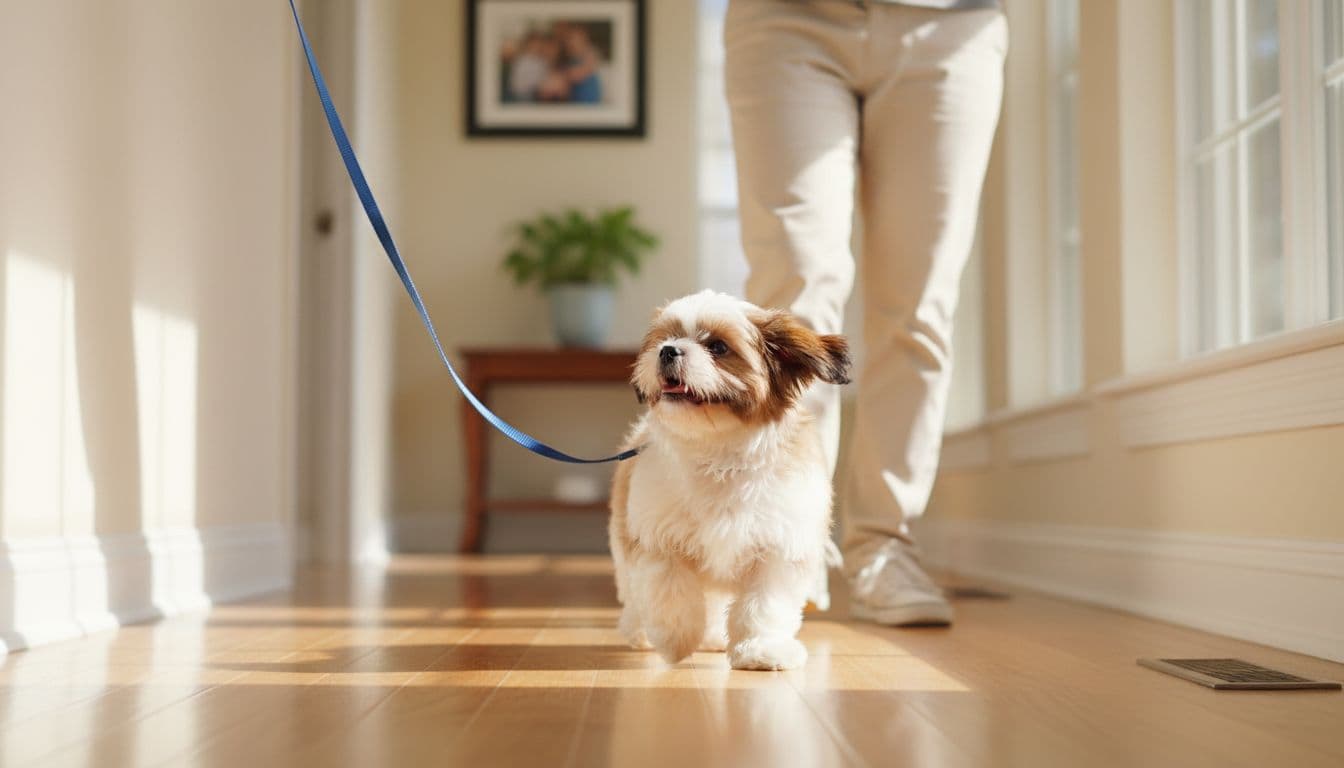
Many Shih Tzus are brave at home and cautious out in the world. That’s normal. Our job is to build confidence without flooding them with scary experiences. Think of it like teaching a kid to swim, we don’t start in the deep end.
Leash skills and social skills overlap here. A puppy who feels safe is a puppy who can learn.
Leash training in tiny steps, from indoors to the sidewalk
We keep leash training almost boring at first:
- Let them wear collar or harness for a minute, treat calm behavior.
- Clip leash, practice leash walking in short loops indoors, reward our shih tzu puppy for staying near us.
- Add a few steps in the hallway, then the yard.
- Try a 5-minute outside leash walking that’s mostly sniffing and treats.
Our no-pull method is simple: if they pull, we stop. When the leash goes slack, we move again. We don’t drag them back, we just let the environment teach, “pulling doesn’t work.”
Safe socialization we can do every day (people, sounds, dogs, surfaces)
Socialization means positive exposure, not forced greetings. We aim for small wins:
- New “people types” (hats, hoodies, tall people, kids at a distance)
- Household sounds at low volume (vacuum far away, blender briefly)
- Different surfaces (tile, grass, gravel, a welcome mat)
- Short car rides with treats
- Calm dog greetings with known friendly dogs
If our vet says it’s appropriate for our vaccine stage, we consider puppy classes or obedience classes. For a breed-specific overview of what to prioritize, this guide is a useful reference point: how to train a Shih Tzu puppy.
We watch body language closely. If the tail tucks or the puppy freezes, we create space. We want curiosity, not panic.
A week-by-week Shih Tzu puppy training plan we can stick to
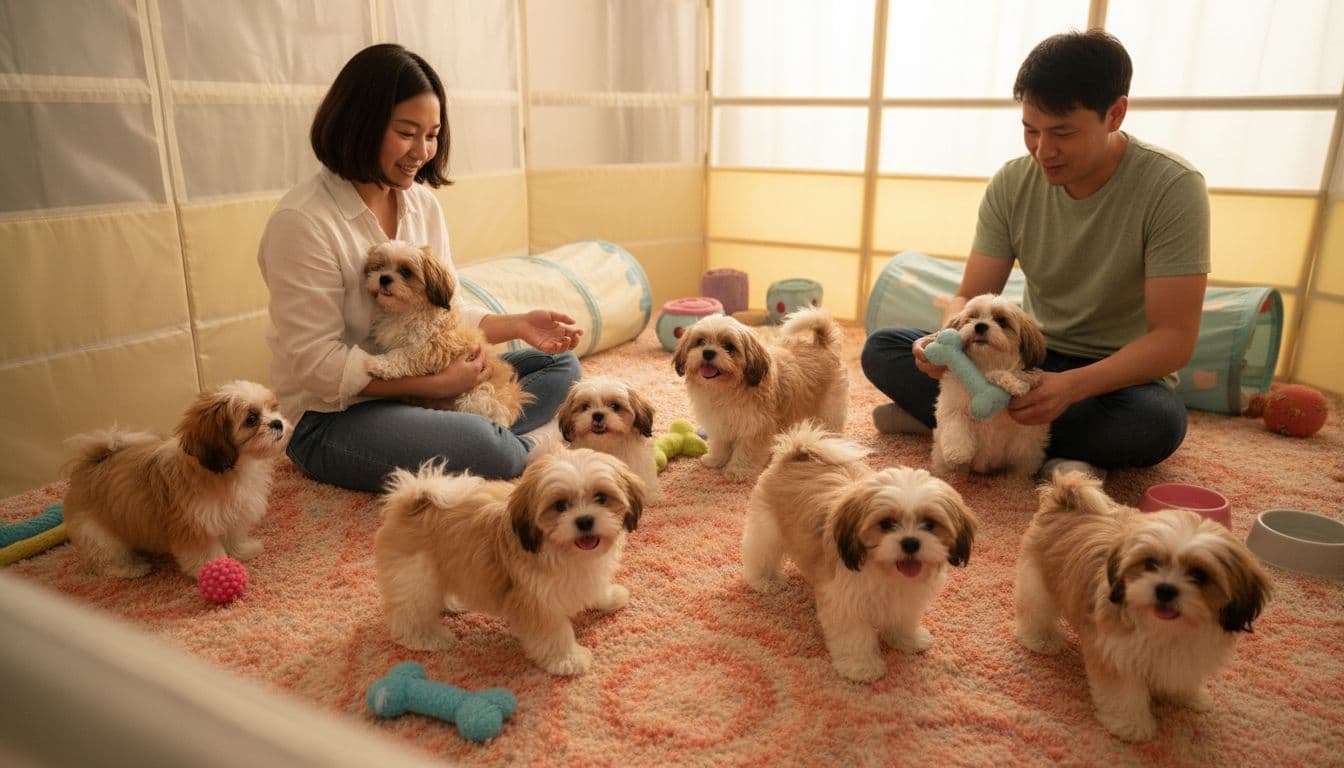
A plan keeps us from trying to teach everything at once. We measure progress by consistency, not perfection. Are accidents trending down? Is the name response improving? Can we get a sit in a new room? Those are real wins.
8 to 16 weeks, we focus on routine, potty habits, and calm manners
Priorities, as core focus areas for training milestones and desired behavior:
- Potty schedule and supervision
- Crate comfort and short alone-time practice
- Name game, sit, down
- Gentle handling for grooming
- Indoor leash practice and brief outdoor exposure
A simple daily practice template for your Shih Tzu puppy:
- Morning: 2 minutes name game, 2 minutes sit
- Afternoon: 2 minutes handling (paws and brush), 2 minutes down
- Evening: 3 minutes leash loops indoors, then calm chew in crate
If we miss a session, we move on. Consistency over time beats one perfect day.
Troubleshooting:
- Ignoring cues: we lower distractions, upgrade treats, and ask once.
- Barking for attention: we reward quiet, then give attention.
- Unwanted chewing during the teething process: we manage with gates and redirect to a chew.
4 to 8 months and beyond, we level up recall, leash skills, and real-world reliability
Priorities for your Shih Tzu puppy:
- Stronger “come” with bigger distances
- Longer “stay” (we add seconds, not minutes)
- Polite greetings (sit for hello)
- Practice in new places (friends’ houses, quiet parks)
- Grooming tolerance with longer brushing sessions
- Alone-time that slowly stretches, so we prevent clingy panic
We reduce treats slowly. We still pay well for hard things (like recall outside), but for easy skills we swap in praise, a toy toss, or a life reward like going out the door.
If puppy adolescence hits and your puppy “forgets everything,” we don’t panic. We go back to basics and keep showing them the path to success.
Frequently Asked Questions about shih tzu puppy training
How long does it take to potty train a Shih Tzu puppy?
Many puppies show real progress in potty training within a few weeks, but reliable habits often take a few months. Our consistency matters more than the calendar.
Should we use pee pads?
It depends on your home and schedule. Pads can help in high-rise living or emergencies, but they can also slow outdoor training. If we use them, we keep them in one spot and still practice outdoor trips often.
What if our puppy won’t take treats outside?
Outdoor distractions are powerful. We try higher-value treats like bits of adult puppy food, shorten the outing, and reward the instant they check in with us. Sometimes we practice in the doorway first.
Is a clicker necessary?
No, but it can help timing, especially for kennel training. If we use one, we click at the exact moment the puppy does the right thing, then treat right away.
How do we stop nipping?
We redirect to a toy, then reward gentle play with verbal praise. If the puppy stays mouthy, we end play for 10 to 20 seconds. That teaches, “teeth make fun stop.”
Conclusion
Shih Tzu puppy training works best when we build it step by step: set up the house, keep sessions short, potty on a consistent schedule, teach practical commands, and socialize gently. We don’t need perfection, we need repeatable routines.
Tzuzi didn’t transform overnight, but week by week, the training milestones stacked up, fewer accidents, calmer crate time, and a puppy who started looking to us for clues. That’s the real goal.
Pick one routine to start today, either the potty schedule or the name game, and track your wins for a week. Small progress adds up fast when we stay kind and consistent.