
Affiliate Disclosure: Some of the links on this site are 'affiliate links.' We may receive an affiliate commission if you click on the link and purchase the item, with no additional cost to you.
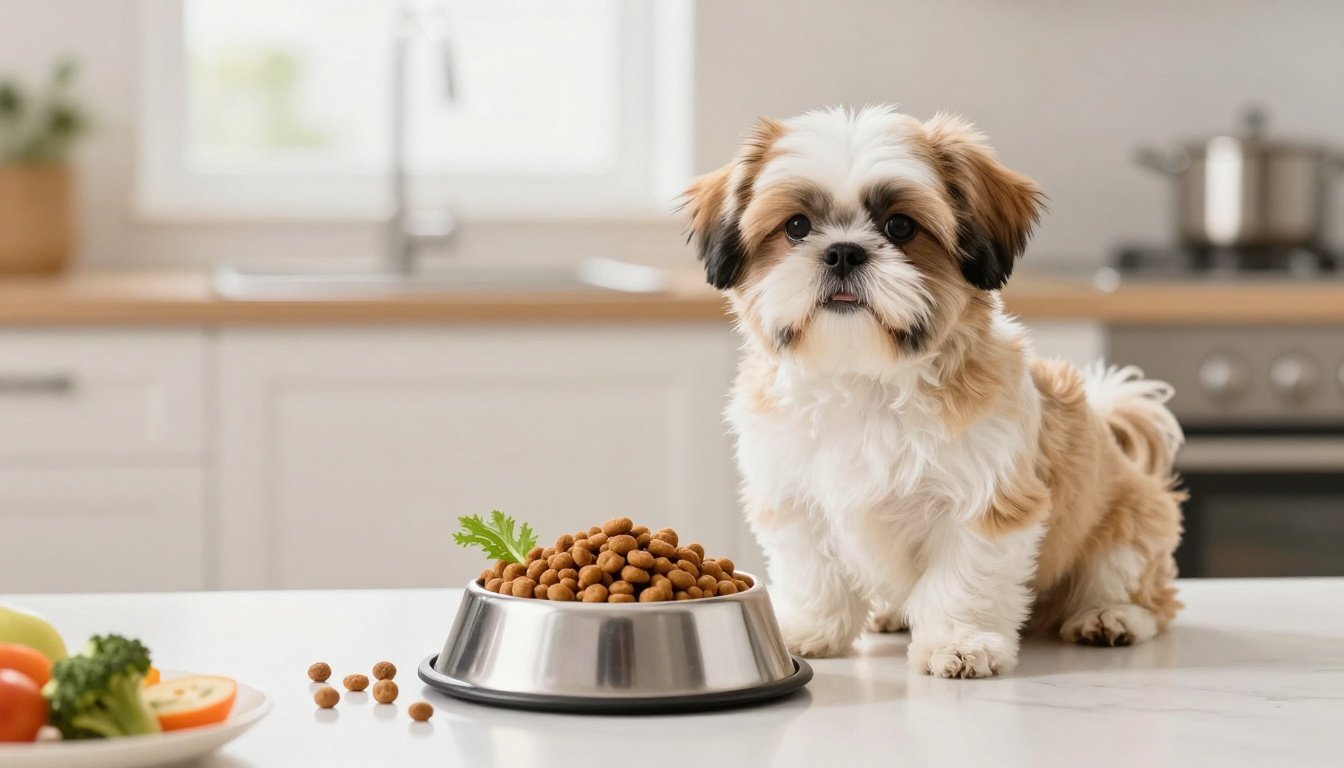
Have you ever watched your Shih Tzu puppy, a lively toy breed, lick the bowl clean… and still look up like they’re auditioning for a snack commercial with those boundless energy levels? We’ve been there. When Tzuzi was little, we worried about everything: Are we feeding enough, too much, or the wrong thing for that tiny tummy?
This shih tzu puppy diet guide addresses their nutritional needs and is the simple, real-life version of what we wish we had on day one. We’ll cover what to feed, how much, how often, and the common mistakes that can turn a happy pup into a gassy, itchy, or “why is this poop liquid?” situation. We’ll also share easy signs to watch so you can adjust with confidence.
Key Takeaways
- Pick a small breed puppy food with a puppy growth formula that’s “complete and balanced” for growth (or “all life stages”).
- Small-breed puppies do best with a feeding schedule of smaller, more frequent meals to match their high energy levels, especially early on.
- Use the bag’s feeding chart as a starting point, then adjust using body condition for a healthy weight and weekly weigh-ins.
- Keep treats tiny and limited, and skip risky people foods.
- Change foods slowly over 5 to 7 days to protect that sensitive Shih Tzu stomach.
- Follow these tips to meet your puppy’s nutritional needs for healthy development.
What makes a Shih Tzu puppy’s nutritional needs different

Shih Tzu puppies, as a toy breed, grow fast, but their stomachs stay tiny. That combo matters. They can burn through energy quickly, and when their meals are too big or too far apart, we may see energy dips, messy stools, hypoglycemia, or the classic “I’m hungry but I’m picky” dance.
A few Shih Tzu-specific realities shape our feeding choices:
- Small mouths and tiny teeth: Kibble size and texture matter more than we expect.
- Sensitive digestion: Sudden changes and rich add-ins can backfire fast on their delicate digestive system.
- Steady energy needs: More frequent meals help keep them even-keeled, especially in the first months.
- Coat and skin support: Shih Tzus are basically walking hair goals, and food can show up in their coat quality.
We also keep an eye on the label statement. In 2026, we still want high quality puppy food that says it’s complete and balanced for growth under AAFCO feeding standards (or “all life stages”). AAFCO’s minimums for growth are 22.5% protein and 8.5% fat on a dry matter basis relative to body weight, so most good puppy foods will meet or exceed that. We prioritize a protein-rich diet for optimal growth.
The core nutrients we look for on a puppy food label
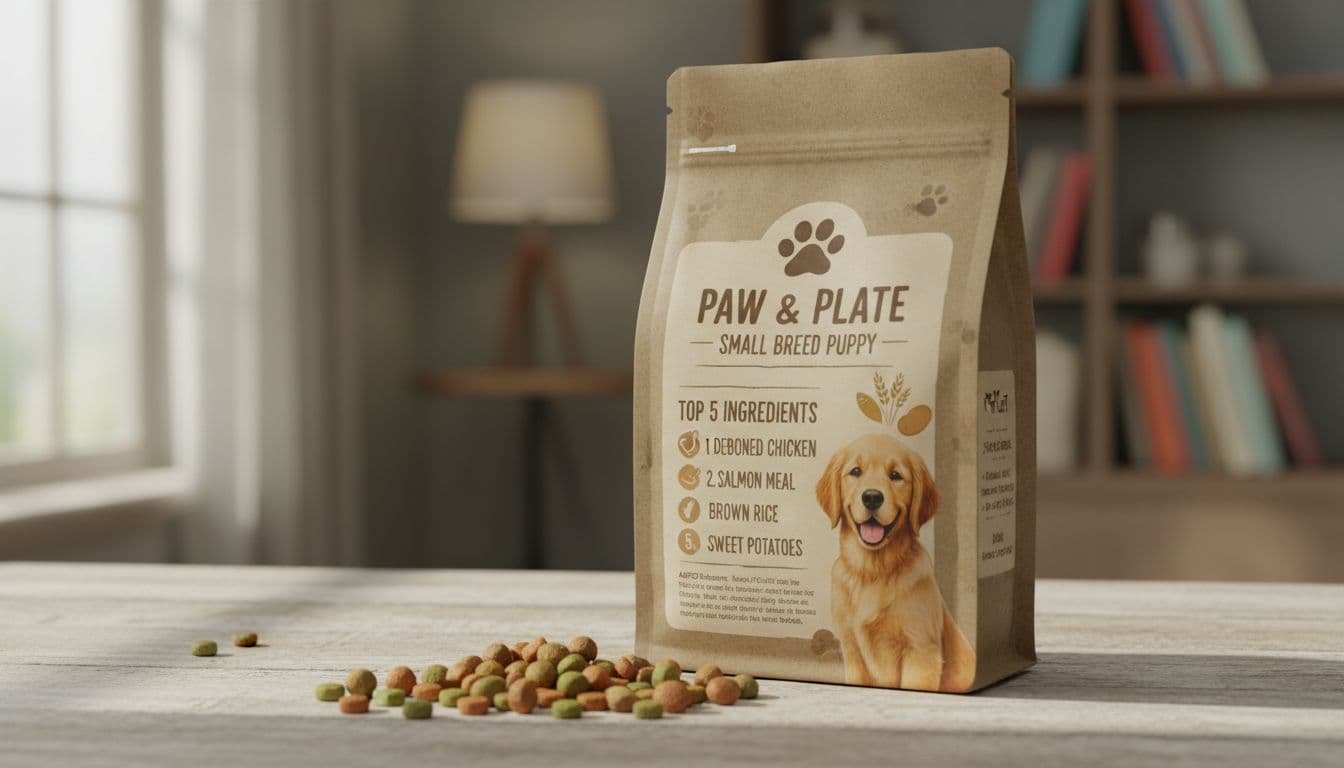
We don’t have to be nutrition scientists to shop smart. Here’s what we check first:
Named animal protein first: Chicken, turkey, salmon, beef, or lamb listed clearly (not “meat meal” with mystery vibes).
Protein and fat for growth: While AAFCO sets minimums, many small-breed puppy foods we see sit around 29 to 36% protein and 18 to 19% fat as a practical “this looks like a growth formula” target.
DHA and essential fatty acids like Omega-3 and Omega-6: Helpful for brain and eye development (often from fish oil).
Balanced calcium and phosphorus: For bone growth (too much or too little can cause issues).
Small kibble size: Easier chewing, less frustration, fewer leftovers dropped on the floor.
We also try to avoid foods that rely heavily on fillers and additives, or that upset our puppy’s sensitive stomach. Some pups do fine, but Shih Tzus can be sensitive, so we keep it simple.
Kibble, fresh, wet, or mixed, how we choose what works for our puppy

There’s no single “right” choice for every pup. We think of it like shoes, the best pair is the one that fits your feet and your life. While some owners explore a raw food diet for its natural appeal, we weigh it carefully against other options.
Dry kibble is convenient, easy to measure, and many pups do great on it. For tiny mouths, we like small-breed formulas, and sometimes we soften kibble with warm water for a minute or two (especially during teething).
Wet dog food can be easier to eat and often smells more tempting for picky puppies. It’s also helpful if your pup isn’t drinking much, though we still want fresh water available all day.
Fresh, raw food diet, or lightly cooked options can work well, but we only use a raw food diet when it’s nutritionally complete for growth.
Mixed feeding (kibble plus a little wet, or even incorporating elements of a raw food diet) is common and can boost palatability without overcomplicating life.
When we feel stuck comparing options like a raw food diet to more traditional choices, we use reputable roundups as a starting point, then run our top picks by our vet. This Shih Tzu food overview is one example of the kind of comparison page that can help us narrow the field.
How much to feed and when, a realistic feeding schedule from 8 weeks to 12 months
Most feeding charts are a starting line, not the finish. Our goal is steady growth, steady energy, and a body shape that stays athletic (not round like a fuzzy little ottoman).
Here’s the schedule that tends to work well for small-breed puppies, with the understanding that your pup’s needs may shift with activity and growth spurts. If you like charts, this new puppy food chart is a handy reference point for early months.
Our feeding schedule by age (and why smaller meals matter)
AgeMeals per daySimple timing example2 to 4 months4Morning, lunch, afternoon, evening4 to 6 months3Morning, afternoon, evening6 to 12 months2 to 3Morning and evening (add midday if needed)
Smaller meals help prevent big energy drops and can be easier on digestion. We also notice less begging when meals are predictable.
Around 12 months, many Shih Tzus can transition to adult dog food. We do it gradually and confirm timing with our vet, especially if our pup is on the petite side.
Portion sizes without guessing: calories, cups, and quick checks
Calories sound intense, but they’re just a measurement tool. A practical starting point we use is 25 to 35 calories per pound per day, depending on activity and growth stage.
Example: a 4 lb Shih Tzu puppy might need a daily calorie intake of roughly 200 to 250 calories, split across meals. The food bag will list calories per cup or per can, which makes the math doable.
Then we sanity-check with body condition:
- Ribs: We should feel them under a light layer, not see them sharply.
- Waist: From above, there should be a little inward curve behind the ribs.
- Energy and stool: Consistent energy and formed stools usually mean we’re close.
These checks are key to preventing obesity and keeping that athletic shape. We re-check portion sizes and body weight every 1 to 2 weeks, because puppies change fast, sometimes overnight.
Keeping our Shih Tzu puppy’s stomach happy and avoiding common diet mistakes
The top “diet drama” we see with Shih Tzu puppies is simple: too many extras, too fast of a change like abruptly starting a raw food diet, or treats quietly taking over the calorie budget. It’s like letting a toddler live on crackers, then wondering why dinner is a battle.
If your puppy has ongoing diarrhea, vomiting, weight loss, or seems tired and not themselves, we don’t wait it out. We call the vet.
Foods we never feed, plus treat rules that help with training
We keep this list taped to our brain, because accidents happen:
- Chocolate
- Grapes and raisins
- Onions and garlic
- Xylitol (often in sugar-free gum and candies)
- High-fat table scraps (can trigger pancreatitis)
For treats, we follow one rule that saves us again and again: small treats for small dogs. Tiny, soft training treats work better than big crunchy ones, and they don’t blow up the daily calories. We also keep fresh water available at all times, even if your pup acts like the bowl is invisible.
How we switch foods safely and what to do if diarrhea happens
Switching to a raw food diet requires extra care because of its complexity for a puppy’s sensitive system, but here’s how we do it safely, including a raw food diet transition, to gently support their digestive system:
- Days 1 to 2: 75% old, 25% new
- Days 3 to 4: 50% old, 50% new
- Days 5 to 6: 25% old, 75% new
- Day 7: 100% new
While switching, we track a few quick clues: stool shape, itchiness (possible food allergies), gas, ear gunk, and energy levels.
Red flags that mean we call the vet quickly: vomiting that won’t stop, blood in stool, signs of dehydration (dry gums, sunken eyes), marked lethargy, refusal to eat, or body weight loss.
Shih Tzu Puppy Diet FAQs
Can we free-feed a Shih Tzu puppy?
Some very young puppies do better with more frequent access to food, but free-feeding can make it harder to track intake and can encourage picky habits. We prefer scheduled meals once they’re settled, then we adjust if our vet recommends a different plan.
What if our puppy refuses kibble?
First, we rule out issues like teething pain. Then we try simple changes: smaller kibble, brief warm-water soaking, mixing a spoonful of wet food or home-cooked food, or starting a raw food diet. If appetite stays low for more than a day or if transitioning to a raw food diet, we check in with the vet.
Do Shih Tzu puppies need supplements?
Most complete puppy foods already include protein for muscle maintenance, glucosamine for joint health, and other essentials they need. Adding calcium, oils, or multivitamins can throw off balance. We only supplement when our vet suggests it for a specific reason.
When do we switch to adult food?
Many Shih Tzus transition around 10 to 12 months, but it depends on growth, body weight, and body condition. We switch slowly and keep weighing weekly during the change.
Conclusion
A calm, healthy shih tzu puppy diet usually comes down to a short checklist: choose a small-breed growth formula or vet-approved raw food diet, feed on a steady schedule, measure portions, weigh weekly, keep treats tiny, avoid dangerous foods, and transition slowly.
That’s exactly what helped Tzuzi go from “always hungry, sometimes gassy” to a pup with steady energy, a healthy weight, and a happy belly. If you watch your puppy closely and partner with your vet on a Shih Tzu puppy diet, you’ll feel the rhythm click into place, and mealtime gets a whole lot more fun.