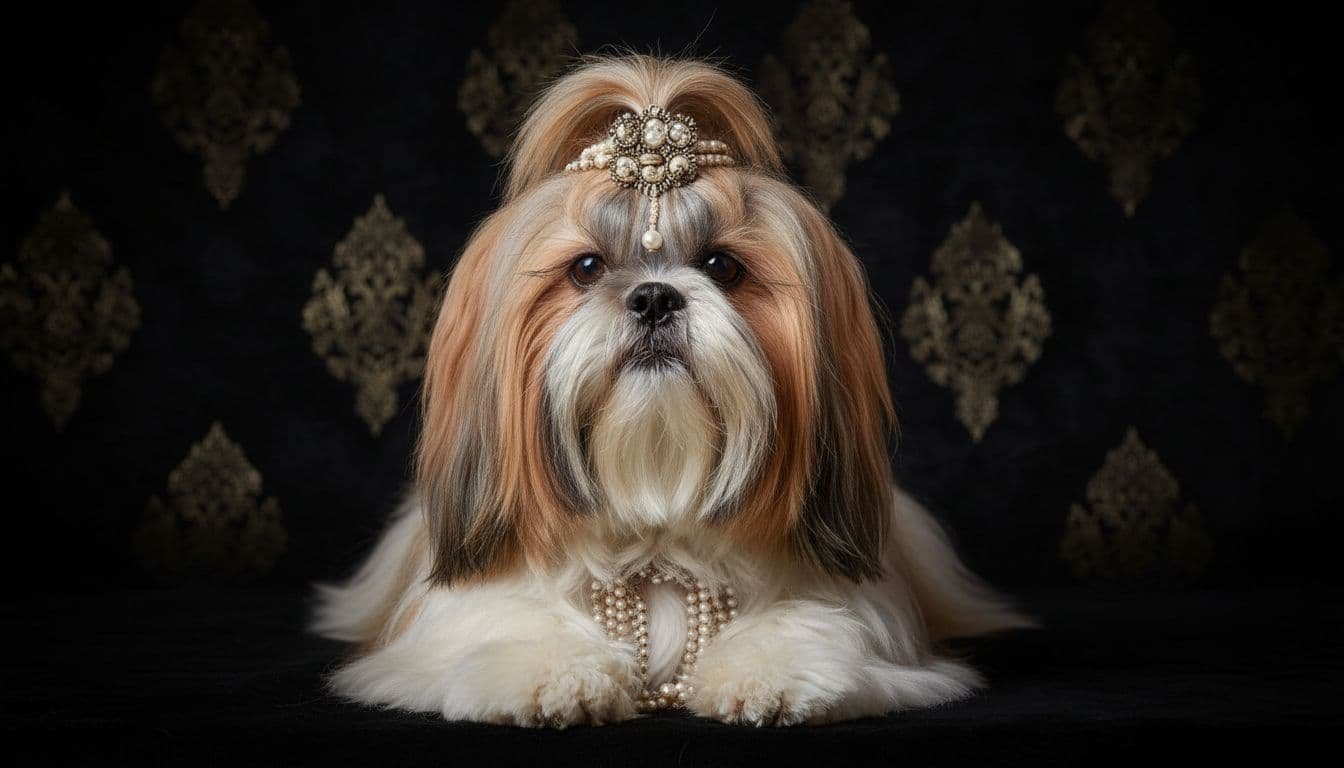

Affiliate Disclosure: Some of the links on this site are 'affiliate links.' We may receive an affiliate commission if you click on the link and purchase the item, with no additional cost to you.
If you’ve ever met a Shih Tzu, you know the feeling. They don’t just walk into a room, they arrive, like a tiny royal who expects cuddles on schedule. This shih tzu breed guide is for anyone who wants a friendly companion and doesn’t mind committing to grooming (or paying a groomer) to keep that famous coat comfy and clean.
We’ll cover what Shih Tzus are really like day to day, a quick and fascinating history, and simple care habits that make life easier for both you and your pup. One heads-up: their adorable flat face and flowing hair come with special needs, especially around heat, eyes, and coat care. Once we understand those basics, they’re a joy to live with.
Shih Tzu traits at a glance, what makes this breed so lovable

An affectionate Shih Tzu puppy relaxing on a lap at home, created with AI.
Shih Tzus are classic companion dogs. They’re small enough for apartment life, social enough to feel like part of every conversation, and confident enough to act like they own the couch (because, in their minds, they do).
Here’s the “real life” version of what most of us notice quickly:
| Trait | What it usually means at home |
|---|---|
| Small, sturdy build | Easy to carry, but not fragile, still needs safe handling |
| People-focused temperament | Wants to be near us, follows us around, loves routines |
| Long coat (often kept trimmed) | Regular brushing and grooming, mats happen fast |
| Short muzzle | Can struggle in heat, may snore, needs calm exercise |
| Alert nature | Will bark at sounds, then ask for a snack |
Noise level varies. Some are chatty doorbell reporters, others are quiet little shadows. They’re not typically “yappy” for no reason, but they do notice everything.
They also tend to fit a wide range of homes: singles, families, retirees, and multi-pet households. The key is consistency and gentle boundaries. If we let them run the show, they will. If we guide them with patience, they’re wonderful.
For a quick snapshot of whether the breed fits your lifestyle, the AKC’s Shih Tzu lifestyle overview lines up well with what many Shih Tzu families experience, especially around grooming and companionship needs.
Personality basics, affectionate, confident, and sometimes stubborn
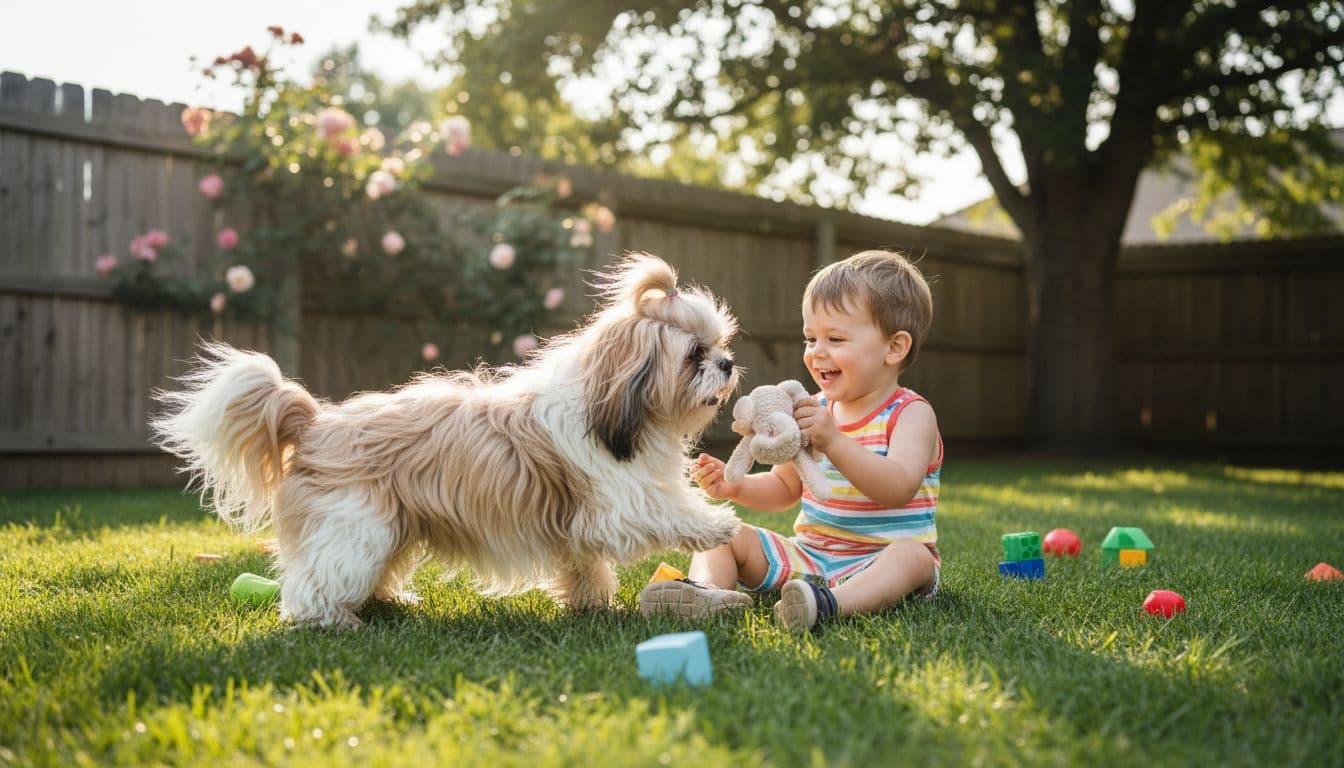
A happy Shih Tzu enjoying gentle playtime outdoors with a child, created with AI.
Shih Tzus are affectionate in a way that feels personal. Many of them pick “their person,” then still make time to charm everyone else. They love laps, warm blankets, and being wherever we are, even if we’re just folding laundry.
They’re confident too. Not “tough dog” confident, more like “I belong here” confident. That’s why they can do well with respectful kids and friendly visitors when we socialize them early.
A few common personality quirks we should be ready for:
Stubborn moments: They’re smart, but they don’t always care. Short, upbeat training sessions work better than long drills.
Separation stress: Because they’re so people-oriented, long alone stretches can lead to whining, pacing, or barking. Routine helps, and so do calm departures and returns.
Alert barking: They might announce hallway sounds or delivery trucks. They’re not true guard dogs, but they are excellent little “neighborhood reporters.”
What helps most is simple: positive reinforcement, early social time, and predictable daily rhythms. If we keep training light and rewarding, they usually lean in.
Size, looks, and coat types, what we can expect day to day
Most adult Shih Tzus land around 8 to 11 inches tall and 9 to 16 pounds. They’re compact, with a sturdy body, a tail that curls over the back, and that signature face that looks like it’s always about to share a secret.
The coat is a big deal. The shih tzu breed is known for a long, flowing double coat, but many families choose a shorter trim for sanity and comfort.
A long “show coat” means:
- Daily brushing and combing down to the skin
- High mat risk, especially in friction spots
- More time, more grooming appointments, more cost
A shorter “puppy cut” means:
- Brushing a few times a week for most dogs
- Fewer tangles, faster drying after baths
- Easier face and hygiene maintenance
Tear staining is common, and facial hair can trap food and moisture. Gentle daily face cleaning matters because crusty corners and damp beards can turn into irritation fast. We don’t need fancy routines, just steady ones.
If you want a deeper product-focused read for bath time, our guide to how to choose Shih Tzu shampoo is a helpful starting point, especially for sensitive skin and that dense coat.
History of the Shih Tzu, from Tibetan roots to royal palaces
The Shih Tzu’s history feels like a storybook. It helps explain why they act the way they do today. They weren’t bred to herd sheep or retrieve ducks. They were bred to be close companions, living indoors, watching people, and being adored.
That legacy shows up in modern life. Many Shih Tzus still prefer a soft routine, a warm lap, and a front-row seat to whatever we’re doing.
For a quick “today-focused” overview that pairs well with the history, Hill’s breed profile on the Shih Tzu is a nice companion resource, especially on temperament and daily needs.
Ancient origins in Tibet and the “lion dog” legend
Shih Tzus are widely recognized as an ancient breed with roots connected to Tibet. Small companion dogs appear in old art and records from the region, and these dogs were valued for companionship and for being alert little watchers in monasteries and homes.
The “lion dog” idea is part legend, part look. With the full coat and proud stance, it’s easy to see why people compared them to tiny lions. The name “Shih Tzu” is often translated as “lion,” and that classic mane-like coat helped seal the image.
Even back then, the role stayed consistent: stay close, keep company, and let humans feel less alone.
Life in imperial China, near extinction, and how the breed was saved
Over time, these small dogs became closely tied to the Chinese imperial court, particularly during the Qing era. They were treasured inside palaces, bred for companionship, and treated as living treasures. Stories and accounts often mention strict rules around ownership and gifting, with a culture that discouraged selling or trading outside the court.
Breed historians commonly describe the Shih Tzu as being shaped by selective breeding in China, with some accounts suggesting Pekingese influence that may have contributed to today’s flatter face and overall look.
Then history turned sharp. Around the mid-20th century, political upheaval and changing society nearly wiped the breed out. The Shih Tzu was rebuilt in the West using a small founder group. A frequently cited detail is that many modern Shih Tzus trace back to about 13 dogs imported to England and Scandinavia between 1928 and 1952, forming a narrow but vital base for the breed’s survival.
If you enjoy a broader, insurance-and-health oriented summary of the breed’s background and modern care, Pawlicy Advisor’s Shih Tzu guide is worth bookmarking.
Shih Tzu care tips we can follow, grooming, training, food, exercise, and health
This is the practical heart of any shih tzu breed guide. We don’t need perfection, we need repeatable habits. It also helps to lean on pros. A trusted vet and groomer can tailor advice to our dog’s coat, body, and health.
We’ll use Tzuzi as our example here, because real life is rarely picture-perfect. Some days it’s a smooth routine. Other days it’s a chase scene with a brush in our hand.
Grooming and coat care, brushing, bathing, trims, and tear stain basics
Coat care doesn’t have to be complicated, but it does have to be consistent.
A simple routine that works for many Shih Tzus:
- Long coat: quick daily brush, then a comb-through to the skin to prevent hidden mats
- Shorter trim: brush a few times a week, still comb the “hot spots”
- Regular grooming appointments for trims, hygiene areas, and coat checks
Don’t forget the small tasks that prevent big problems:
- Wipe eyes gently, keep hair out of the eyes
- Clean beard area after meals (food loves to hide there)
- Check ears weekly, keep them dry
- Trim nails regularly (or have a groomer do it)
Mat-prone areas show up in the same places again and again: behind the ears, armpits, collar area, and where the legs rub.
Tear staining is common. We keep it simple: gentle cleaning, and if we see redness, squinting, or ongoing irritation, we ask the vet.
Training, housebreaking, and barking, gentle consistency works best
Shih Tzus learn fast, but they learn best when we keep it upbeat. Think of it like teaching a clever toddler who’s also adorable and mildly opinionated.
What tends to work:
Short sessions: 3 to 5 minutes, then a break.
Clear routines: same potty spots, same meal times, same bedtime rhythm.
Reward timing: treat right after the right choice, not after we walk back inside.
Housebreaking can take patience. Frequent potty breaks, a crate or pen routine, and calm praise make a big difference. With Tzuzi, we saw the best results when we treated potty breaks like appointments, not suggestions.
Barking is easier to manage when we teach an alternate behavior. A simple “quiet” cue paired with a reward, plus giving them something to do (sniffing, chewing, settling on a mat), usually beats yelling every time.
Exercise and enrichment, small dog energy with a big need for play
Shih Tzus don’t need marathon walks, but they do need daily movement and mental fun.
A realistic plan for many households:
- One or two short walks each day
- Indoor play (tug, gentle fetch, hide-and-seek with treats)
- Sniff time, even if it’s just letting them explore safely
- Puzzle toys or simple food games
Heat is a real issue for some Shih Tzus because of their shorter muzzles. On hot days, we keep walks brief, stick to mornings and evenings, and watch for heavy panting or reluctance to move. If they seem uncomfortable, we stop.
Low-impact play is usually the sweet spot. We want them happy and bright-eyed, not wiped out.
Feeding and weight management, keeping a sturdy toy breed healthy
Shih Tzus can gain weight faster than we expect, especially if we free-pour food or share lots of table bites. Extra pounds can stress joints and make breathing harder for dogs already built with shorter faces.
Simple habits help:
- Choose a quality, size-appropriate food
- Measure meals, then adjust based on body condition
- Keep treats small, and count them as calories
- Limit table scraps (their eyes are persuasive, we know)
A quick body-check we can do at home: we should be able to feel the ribs without pressing hard, and see a waist from above.
If you’re feeding a young pup, our Shih Tzu puppy feeding guidelines can help you build a routine that fits small-breed needs without turning meals into guesswork. For adults, this round-up of top Shih Tzu dog food brands 2025 is a solid place to compare options, especially if your dog is picky.
Common health concerns in Shih Tzus and when we should call the vet
Shih Tzus can live long, happy lives, but they do have a few issues we should watch for. We keep this general and always loop in our vet for personal guidance.
Common concerns in the breed include:
- Dental buildup: small mouths can mean crowded teeth and faster tartar
- Eye issues: irritation, dry eye, scratches, and sensitivity
- Skin allergies: itching, licking, seasonal flare-ups
- Ear infections: floppy, hairy ears can trap moisture
- Patella luxation: kneecap issues in some small dogs
- Brachycephalic airway trouble: noisy breathing, heat sensitivity, exercise limits for some
Red flags worth a vet call:
- Squinting, eye cloudiness, or sudden eye redness
- Constant scratching or hot spots
- Head shaking, ear odor, or ear redness
- Bad breath with red gums or visible tartar
- Fainting, collapse, or breathing distress
Routine checkups, vet-recommended dental care, and budgeting for health needs (some families use pet insurance) help us stay ahead of problems instead of reacting late. If you want another general care overview from a veterinary clinic perspective, Ancara Vet’s Shih Tzu care page is a helpful reference.
Conclusion
Living with a Shih Tzu is like having a tiny best friend with strong opinions and a soft heart. When we understand the shih tzu breed as it really is, companion-first, people-focused, and wrapped in a high-maintenance coat, we can plan for success. Their Tibet-to-palace history explains that “born to be adored” vibe, and it’s honestly part of the charm.
The care basics stay steady: simple grooming routines, short upbeat training, measured meals, gentle daily play, and quick action when something seems off. We don’t have to do everything perfectly. We just have to show up consistently, the way we do with Tzuzi.
What do you love most about your Shih Tzu, and what are you working on right now with your pup’s care or manners?